
Effective Solutions for Every Project
Sediment Pond Decant Systems
Sediment pond decant systems are designed to safely release treated stormwater while allowing sediment to settle within the pond. By controlling how water exits the pond, these systems help protect downstream waterways and support effective erosion and sediment control on construction sites.
CONTROLLED FLOATING DECANT SYSTEMS
Detain. Manage. Release.
Title
A sediment pond decant system works by slowly releasing water from the upper layers of a sediment retention pond, where sediment concentrations are lowest. Floating decants, primary and secondary decant pipes, and controlled outlet orifices regulate the discharge rate to ensure extended detention time, allowing suspended sediment to settle before water leaves the pond. Designed in accordance with GD05 guidelines, these systems help manage stormwater flows, reduce erosion risk, and improve the quality of water discharged from construction sites.
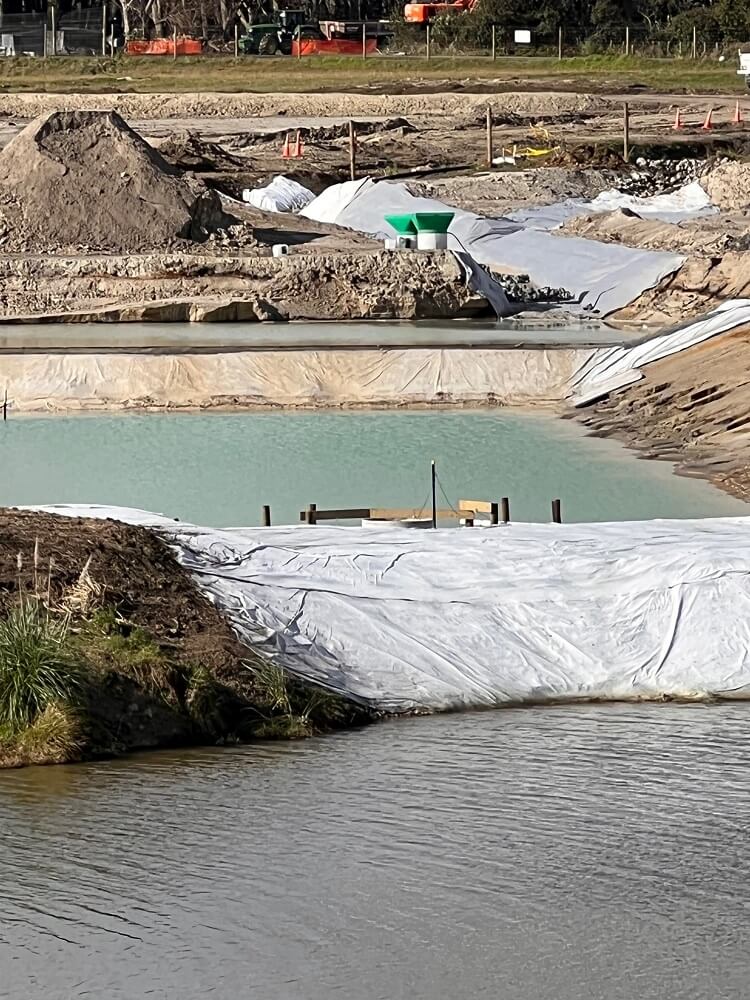
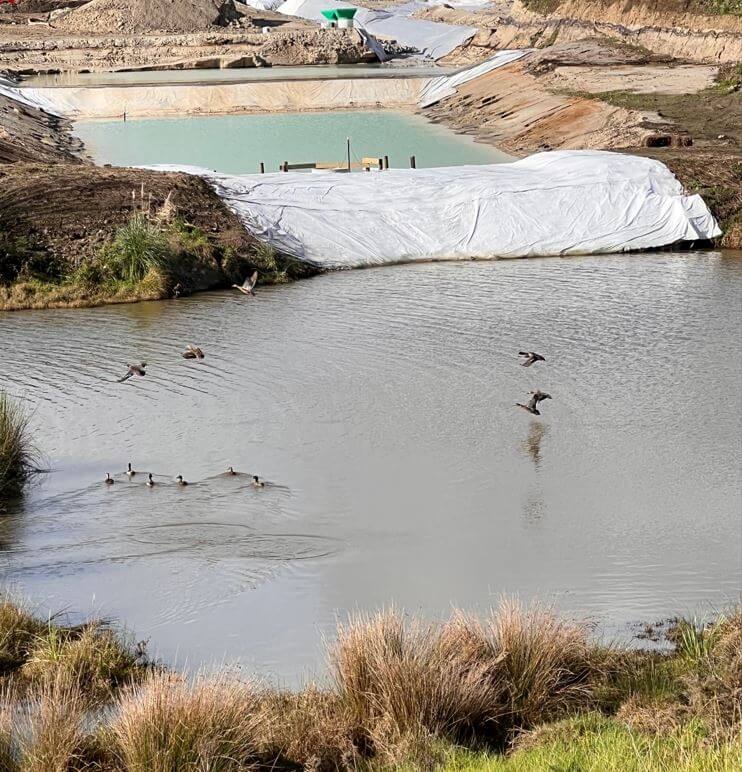
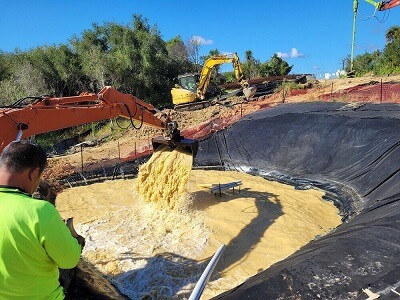
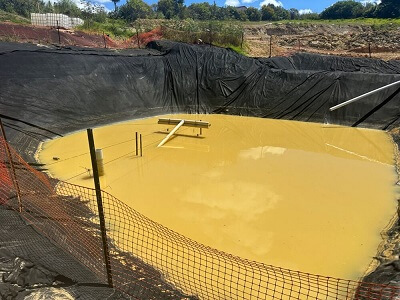
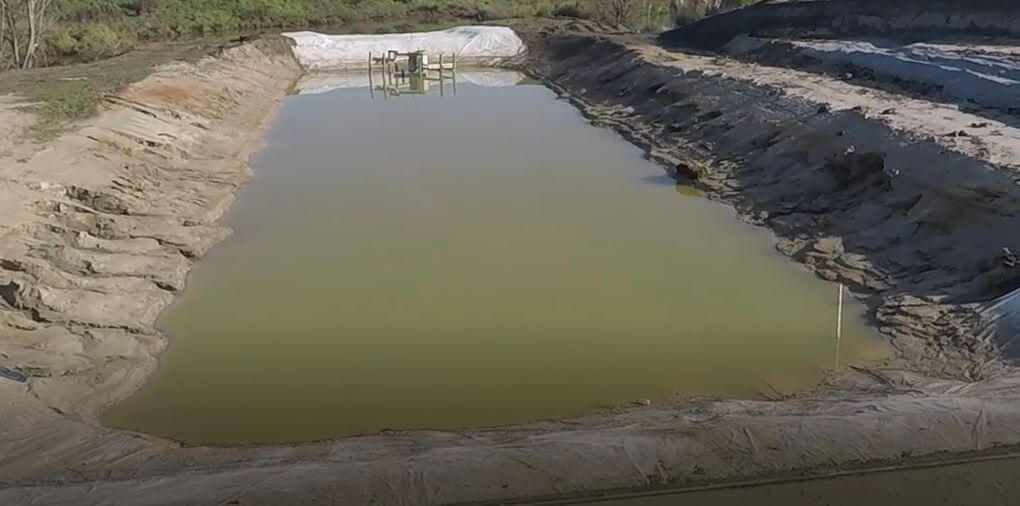
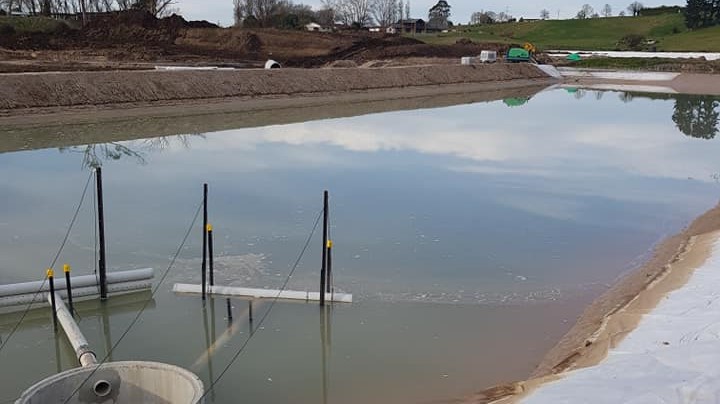
How Does our Sediment Pond Decant System (DG05) Work
Floating Decant System
-
Withdraws water from the upper layers of the pond where sediment concentrations are lowest, ensuring cleaner water is discharged.
-
Multiple holes gradually release water from different levels, maintaining consistent and controlled discharge as the pond water level drops.
Primary and Secondary Decant Pipes
-
Primary decants handle regular water discharge after rainfall events, releasing treated water gradually to avoid disturbing sediments.
-
Secondary decants provide backup capacity for excessive stormwater or primary system malfunctions, preventing pond overflow during high inflow events.
Extended Detention Time
-
Holds water for at least 24 hours after a rain event to allow additional sediment to settle.
-
Ensures cleaner water is discharged downstream.
Office Control
-
Controls outflow by restricting the number of holes in the T-bar, regulating the discharge rate.
-
Recommended discharge rate: 3 litres per second per hectare of contributing area.
-
Ensures water flows out slowly enough for proper sedimentation without causing operational issues.
Spillway and Emergency Overflow
-
Incorporates an emergency spillway to handle extreme storm events and prevent pond overflow.
-
Protects the pond structure by allowing excess water to overflow safely without causing erosion or damage.
Benefits of a Decant System and Pond Design (GD05)
Efficient Sediment Removal: The combination of a properly sized sediment retention pond and a well-designed decant system ensures that the water has enough time for sediment to settle before being discharged.
Improved Water Quality: Floating decants and extended detention help to release water from the upper levels of the pond, where sediment levels are lowest, ensuring cleaner effluent is discharged downstream.
Stormwater Management: The system’s controlled outflow reduces the risk of erosion and flooding, especially during high-flow events, by gradually releasing water.
Regulatory Compliance: Following the GD05 guidelines ensures that construction sites meet environmental regulations, reducing the risk of sediment pollution in nearby waterways.
Key Components of a GD05 Compliant Pond
As specified in Auckland Council GD05 a standard pond includes these essential parts:
Forebay:
A separate initial compartment that captures coarse sediment and dissipates the energy of incoming water; it should comprise 5% of the total pond volume.
Chemical treatment device (Flocbox):
Setup to treat inflow water as per CTMP.
Decant System:
A floating or adjustable arm that skims the cleanest water from the surface. For GD05, a standard decant rate is often 3 litres/second/hectare. (this equates to 135 10mm holes).
Level Spreader:
A structure at the inlet to ensure water enters the pond as a shallow, uniform flow to prevent turbulence.
Emergency Spillway:
A stabilised overflow path sized to safely manage high-intensity storm events.
Baffles:
Optional internal walls used to increase the flow path length, preventing “short-circuiting” where water flows directly from inlet to outlet.
Dead and Live Storage:
Dead Storage: The permanent pool of water (typically 30% of total volume).
Live Storage: The upper portion that fills during rain and is slowly emptied by the decant (typically 70% of total volume).
Key Features
Real-time monitoring of sediment pond turbidity and pH
Telemetry-enabled for remote data access and alerts
Supports environmental compliance and consent reporting
Early warning system for changing water conditions
Ideal for construction sites, earthworks, and stormwater management
Erosion Control’s monitoring service provides peace of mind, helping you maintain clear, safe water in sediment ponds while keeping your construction site compliant and environmentally responsible.
System Benefits & Environmental Outcomes
The pond decant system and sediment retention pond design specified in Auckland GD05 provide an effective solution for controlling and treating stormwater runoff from construction sites. The pond’s sizing, length-to-width ratio, and depth ensure that suspended solids settle out, while the floating decant system helps discharge cleaner water. By adhering to these specifications, construction projects can effectively manage sediment, protect the environment, and comply with local regulations.
Why choose Erosion Control?
We believe we are your best choice for environmental contracting services in the North Island. We offer decades of experience, a range of effective solutions, and a track record of 100% compliance. Our “do it right the first time” philosophy means you get a reliable, professional team working with you.
Providing Creative Solutions
Time and again, we’ve witnessed this fact: Doing the right thing for the environment is the most cost-effective solution in the long run. Known for our consultative approach, we’ll team with project managers early in the planning stages to identify green solutions that meet your project and budget requirements.
Ensuring 100% Compliance
Throughout the design, installation, and maintenance phases, we bring an advanced level of expertise and regulatory knowledge to our clients’ projects. Starting with the planning process, our clients rely on our guidance and expertise throughout the entire construction process.
Offering best-management practices
We implement tried-and-true best-management practices, plus we’re on the forefront of the latest advances. Our clients appreciate that we take time to talk with them, educate them, and help them determine whether new approaches, procedures, or leading-edge technology may suit their site’s needs.
CONTACT US
VISIT AUCKLAND
171 Postman Road
Dairy Flat
Auckland 0794
VISIT HAMILTON
175E Ellis Street
Frankton
Hamilton 3204
HOURS
MON - FRI
7:00AM - 4:00PM
Phone
0800 787 2966
POSTAL
PO Box 130
Silverdale
Auckland